Nobody grows up thinking about insurance claims.
You pay your premiums. Maybe you glance at the policy once. Then life moves on. Until one day something breaks, floods, burns, or collapses, and suddenly you are thrown into a system you were never taught to navigate.
That is when things get messy.
The insurance claim process sounds simple on the surface. Report the damage, get it inspected, receive payment, fix your property. Clean and straightforward.
In reality, it is layered, technical, and filled with moments where small mistakes turn into big financial losses.
So here is the process, stripped down to what actually matters.
Step One: The Initial Inspection
This is where everything begins.
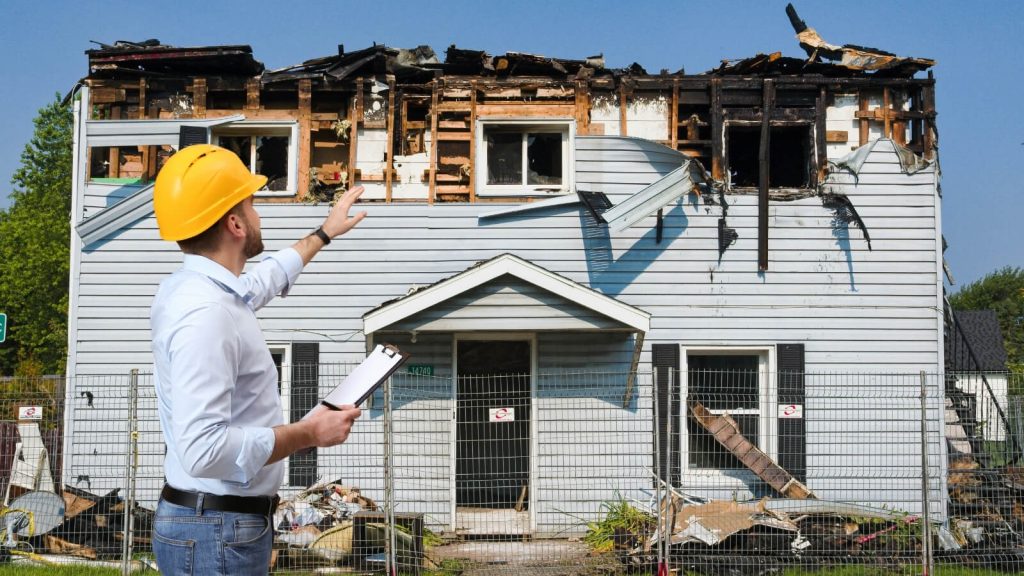
An adjuster comes out to your property. They walk through the damage, take notes, and gather photos. It looks routine, almost casual.
It is not.
What gets documented during this inspection becomes the foundation of your entire claim. If something is missed here, it may never be included later.
That includes hidden damage.
Water behind walls. Smoke residue in ventilation systems. Structural stress that is not immediately visible. These are the details that separate a surface level estimate from a complete one.
Most inspections move quickly.
A public adjuster slows this down in a good way. They focus on depth, not speed. They document everything with the understanding that each detail represents potential value in the final settlement.
Step Two: Damage Evaluation and Pricing
After the inspection comes the numbers.
This is where the damage is translated into cost. Materials, labor, removal, cleaning, repairs, and replacement all get calculated.
It sounds objective. It should be consistent.
But here is where things start to drift.
Insurance estimates are often based on standardized pricing systems. These systems do not always match real world conditions. Costs vary depending on the area, the availability of labor, and the complexity of the repair.
That gap matters.
If pricing is underestimated at this stage, the entire claim is affected. Every line item builds on the last.
A public adjuster rebuilds this evaluation using accurate data and a full understanding of the damage. They are not guessing. They are aligning the estimate with what it will actually take to restore the property.
Step Three: Documentation
This is the backbone of your claim.
Without proper documentation, even valid damage can be ignored or undervalued.
Documentation includes:
- Photos from multiple angles
- Detailed notes on affected areas
- Measurements and material lists
- Reports that connect the damage to the cause
Weak documentation leads to weak outcomes.
Strong documentation creates leverage.
Insurance companies rely on what is proven, not what is assumed. If it is not clearly documented, it becomes easy to question or exclude.
A public adjuster treats documentation like evidence. Every detail is captured with intention, knowing it may need to support a negotiation later.
Step Four: Communication With the Insurance Company
This is where patience starts to get tested.
Emails, phone calls, updates, requests for additional information. The process becomes a back and forth that can feel endless.
Sometimes it moves quickly. Other times it slows to a crawl.
For most people, this is unfamiliar territory.
You are dealing with representatives who handle claims daily, using language and processes that are second nature to them but not to you.
That imbalance matters.
A public adjuster steps into that communication and levels it out. They understand the terminology, the timelines, and the expectations. They know when to push, when to clarify, and when to challenge something that does not make sense.
Instead of reacting to the process, they control it.
Step Five: Negotiation
This is the part that rarely gets explained.
Insurance claims are not always fixed numbers. They are often starting points.
The initial estimate you receive is not necessarily the final one. It is simply the first version.
Negotiation is where adjustments happen.
If damage was missed, it can be added. If pricing was too low, it can be challenged. If coverage was misinterpreted, it can be corrected.
But negotiation requires preparation.
It is not about arguing. It is about presenting clear, supported reasons for changes. Documentation, policy language, and accurate estimates all come into play.
A public adjuster handles this process with a strategy.
They know what can be challenged and how to present it in a way that leads to real movement instead of delays.
Step Six: Settlement
This is the moment everyone waits for.
You receive the payment, or payments, depending on how the claim is structured. It feels like the finish line.
But there is one question that matters more than anything else.
Is it enough?
A fast settlement is not always a fair one. Accepting the first number without reviewing it carefully can lock you into a payout that does not fully cover repairs.
Once a claim is finalized, going back becomes difficult.
That is why everything leading up to this point matters so much.
Why Claims Often Fall Short
Most issues in the claim process do not come from one big mistake.
They come from a series of small ones.
An inspection that moves too fast. A detail that is not documented. A line item that is underestimated. A question that is never asked.
Individually, these seem minor.
Together, they can reduce a claim by thousands.
The process rewards precision.
And most homeowners are navigating it for the first time, learning as they go, while the other side has done it hundreds or thousands of times.
The Role of a Public Adjuster in the Process
A public adjuster is not just someone who steps in at the end.
They can be involved at any stage, and the earlier they enter, the more influence they have over the outcome.
They inspect with depth.
They document with purpose.
They evaluate with accuracy.
They negotiate with strategy.
Instead of reacting to decisions made by the insurance company, they help shape the claim from the beginning.
The Difference Between a Smooth Claim and a Strong Claim
A smooth claim feels easy.
It moves quickly. There are few questions. The process does not seem stressful.
But smooth does not always mean complete.
A strong claim is different.
It is thorough. It is detailed. It is built to withstand scrutiny and push for the full value of the damage.
Sometimes it takes more effort. Sometimes it takes more time.
But the outcome reflects that effort.
Final Thought
The insurance claim process is not as simple as it looks.
It is structured, detailed, and influenced by how well each step is handled.
Understanding the process gives you awareness.
Having someone experienced guide that process gives you leverage.
Because at the end of it all, the goal is not just to close a claim.
It is to recover fully.
And that only happens when the process is handled with intention from start to finish.